Nobody Teaches You the M25: Inside the Strange Gap in Britain's Driving Lessons
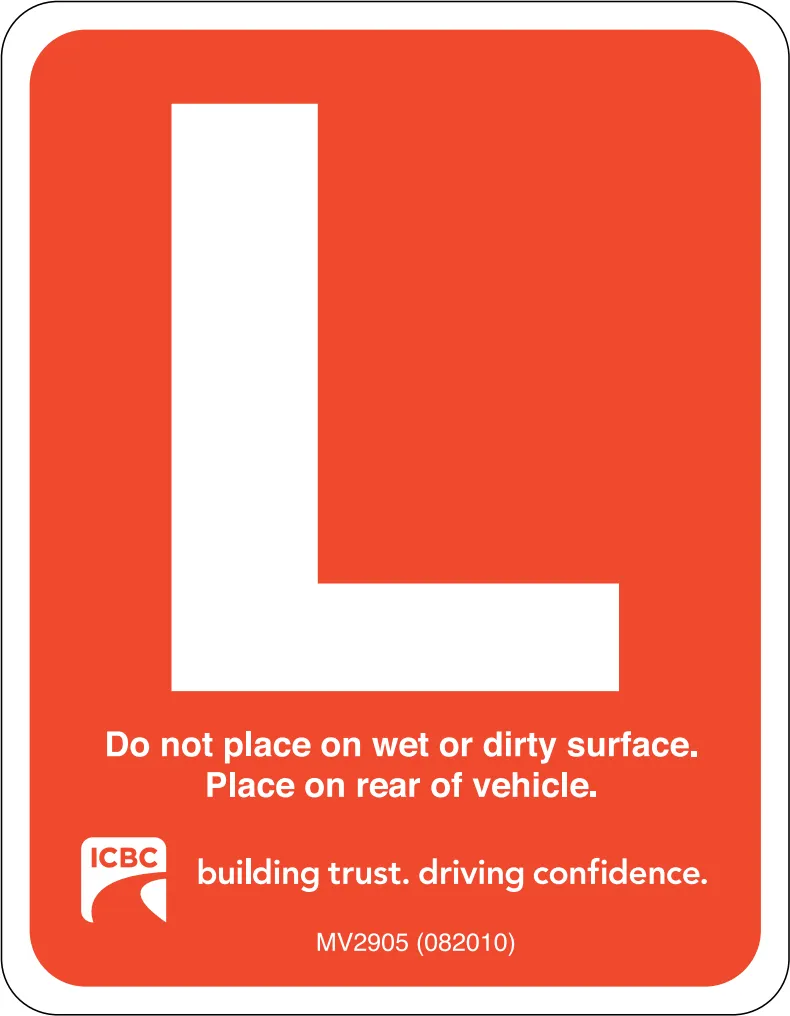
Photo: Insurance Corporation of British Columbia, Public domain, via Wikimedia Commons
The first thing you notice on a motorway lesson is the noise. Not the engine — the instructor. 'Mirror. Signal. Four seconds. Now commit.' And you commit, because at 70mph, hesitation isn't caution, it's a hazard.
I'm 17, three months from my test, and I've just joined the M62 at Junction 27 in a battered Fiesta with L plates and a double clutch of nerves. Before this morning, the fastest I'd ever driven was 50mph on a dual carriageway that smelled of McDonald's. Now I'm doing motorway speeds in the outside lane with a tanker behind me and my palms doing their best impression of a car wash sponge.
Here's the thing that should bother every driver in Britain: none of this was compulsory.
The 2018 Change That Barely Changed Anything
Before June 2018, learners legally couldn't touch a motorway full stop. You passed your test on A-roads and roundabouts, then woke up the next morning licensed to join the M1 at rush hour. Anyone who learned to drive in that era will tell you the same story: the first solo motorway trip was a white-knuckle rite of passage, usually in a borrowed hatchback with a parent gripping the door handle.
The 2018 rule change allowed learners on motorways — but only in a dual-controlled car with an approved instructor. Sensible safeguards. The catch? It stayed entirely voluntary. No examiner will ask you about it. No lesson is legally required. And according to instructors I spoke to, the overwhelming majority of learners still never take one.
'Out of maybe forty pupils a year, I'd take three or four on the motorway before their test,' says Amandeep, an ADI based near Bradford. 'Parents don't want to pay for the extra hours. Pupils think they'll just figure it out after the pass. And honestly, some instructors avoid it because it's harder work than another hour practising reverse bay parking.'
That's the quiet scandal of British driver training: we test people exhaustively on manoeuvres they'll use a handful of times a year, and leave them to self-teach the roads they'll use every week.
Why Instructors Say It's the Best Hour Money Can Buy
The instructors who do offer motorway lessons are almost evangelical about them. 'It's the single most valuable lesson I teach,' Amandeep says. 'Not because motorways are hard — they're actually the easiest driving once you're flowing. It's because pupils discover what 70mph actually feels like. On the test, you never go above 60. They've never experienced closing speeds, never planned three lanes ahead, never had an HGV's slipstream shove the car at a junction.'
There's also the lane discipline problem. Motorway lessons hammer home the habit of returning to the left lane — something that, if you believe any middle-lane hogging thread on X, half the nation never learned. 'I tell every pupil: the outside lane is a visiting place, not a residence,' Amandeep laughs. 'Better they hear it from me at 17 than from a flash of headlights at 25.'
My Hour at 70
Back on the M62, the first ten minutes are genuinely terrifying. Lane three feels absurdly fast; the distance to the car ahead seems to shrink with every glance. But somewhere around Junction 29, something shifts. The car stops feeling like it's flying and starts feeling like it's flowing. I learn to read the road three vehicles ahead. I learn that a lorry indicating right means a wall is coming. I learn, crucially, that the mirror-signal-manoeuvre rhythm I'd been drilling on quiet estates is the same skill, just compressed.
Then my instructor does the cruellest thing imaginable: 'Right, we're coming off. Slip road, 40mph ramp, merge into a gap doing 70. Your call.'
That slip road is, I'd argue, the most dangerous single piece of road in the country for a new driver. Judging a gap in traffic travelling nearly twice your speed, while accelerating hard, while a wall of steel closes in your mirror — it's a genuine skill, and it's the one thing you cannot practise anywhere else. On a dual carriageway you can usually slow down and slot in. On a motorway slip road, hesitation has consequences.
I got it wrong. Braked when I should have buried the throttle, and got an early lesson in what HGV drivers think of that. The second attempt was better. By the third, I understood why instructors fight for these lessons.
The Case for Making It Compulsory
Motorways remain statistically Britain's safest roads per mile travelled — no junctions, no pedestrians, traffic all moving the same way. But the roads around them, the merging and the lane-changing and the first solo trip, are where new drivers come unstuck. The DVSA's own guidance acknowledges motorway experience builds competence and confidence. The insurance data broadly agrees that early exposure reduces the shock of the first solo motorway run.
So why not make it mandatory? Cost, mostly. An extra lesson or two adds real money to a process that already costs well over £1,000 for most learners. In a cost-of-living squeeze, every additional hour is a barrier, and there's a fair argument that piling requirements onto young drivers just delays licensing rather than improving it.
But the counter-argument writes itself every time a dashcam catches a wrong-way driver on the M60 or a terrified new licence-holder crawling at 45 in lane three, blessing everyone behind them. We made learners sit a theory test about stopping distances on ice. Surely an hour learning to merge at speed deserves the same status.
If You're a Learner (or Love One)
Until the rules change, the motorway lesson is a choice — and it's a cheap one relative to everything else. If you're counting down to your test, book one. If you're a parent, pay for it instead of the fourth attempt at the parallel park. And if you've already passed and quietly avoid the M25 like it owes you money? Plenty of instructors offer post-test motorway or Pass Plus-style sessions. Nobody's watching. Nobody will know. Your pulse, on the other hand, will thank you.
As for me, I passed a few weeks later and joined the motorway solo the same afternoon. It was fine. Calm, even. Because I'd already done the scary part — with someone else's feet hovering over the dual controls, and a voice telling me to commit.


